Related Strategic Google Ads Profit Engine: From Local Presence to AI‑Driven ROI Resources
- Google Business Profile - The Foundation of Local Search
- Mastering Ad Performance Optimization: Strategies for Success
- Boost Your ROI with AI in PPC Advertising: A Guide
- Improve Your Financial Results with a Freelance PPC Consultant
- Understanding Marketing Data Attribution Models and the Conversion Path
Introduction
I have managed millions of dollars in high-performing Google Ads campaigns for a wide variety of clients across the United States. My portfolio ranges from SAP Partners driving expensive software licenses to Data Science Academies pushing new student sign-ups at scale. Tracking performance accurately through various attribution models determines the success or failure of these advertising campaigns.
You cannot optimize a digital marketing budget if you do not know which clicks actually generate revenue through effective marketing attribution.
At the start of every Google PPC engagement, I spend significant time setting up a fully integrated collection of Google properties. This essential setup includes Google Ads, Google Analytics 4, Google Tag Manager, Google Merchant Center, and Google Business.
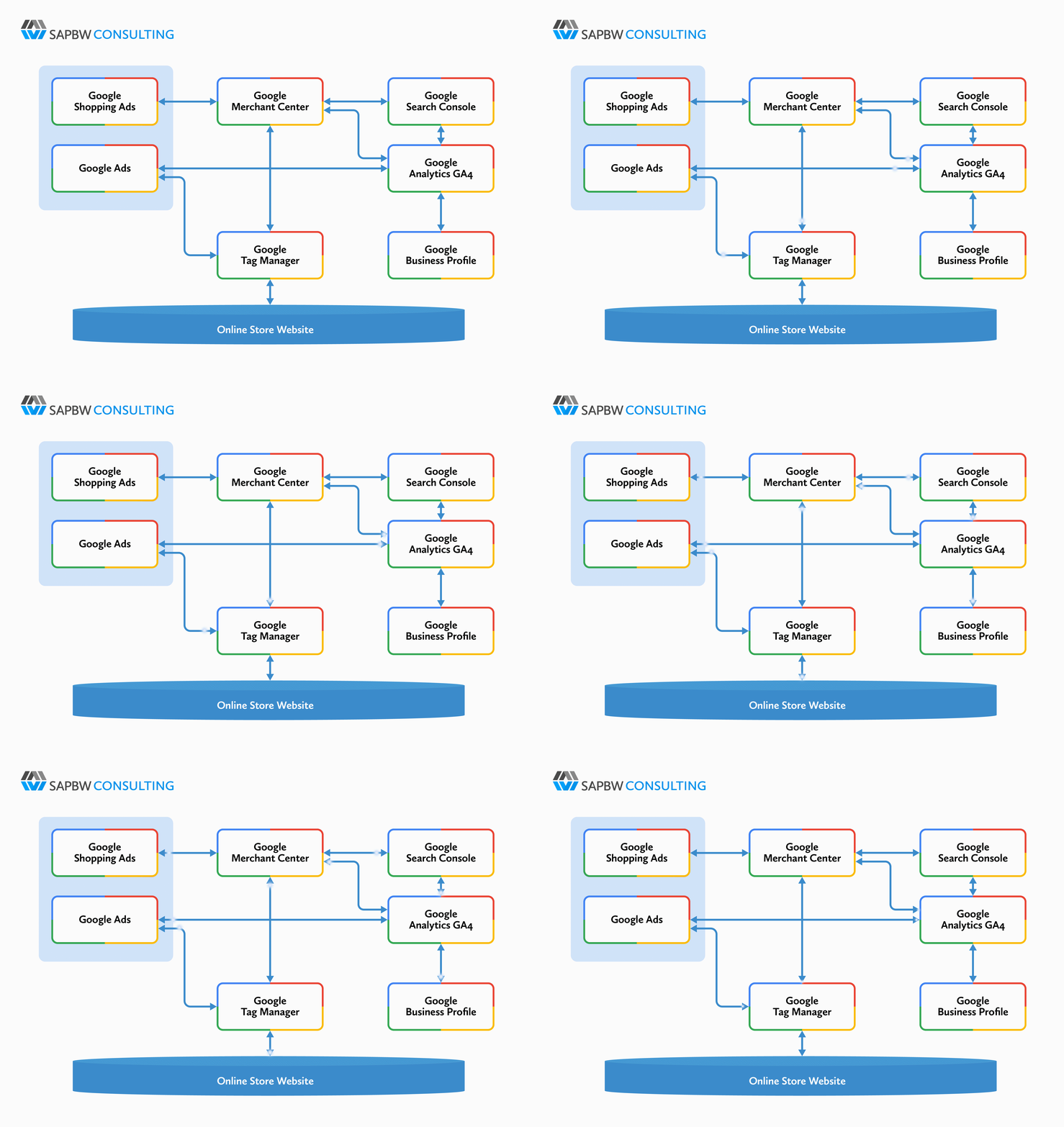
Before launching any ads, I build a strict measurement plan following Google Best Practices to ensure conversion tracking accuracy. As the campaigns begin, I decide which data attribution models work best and set those in the system. Many teams bring in a freelance PPC consultant who understands both campaign strategy and measurement to design and implement their attribution model - such as myself.
Choosing the right way to measure success changes how the Google bidding algorithms spend your money. If you feed the system bad data, you will waste your advertising budget on clicks that never convert. Understanding how these marketing data attribution systems operate gives you a massive advantage over competitors who simply use default settings.
Let us examine how to assign credit properly across your digital marketing channels to improve your overall ROI.
Take the Inbound Marketing & Attribution Assessment
It's always a good idea to baseline your overall approach to marketing, especially if you practice Inbound Marketing.

Understanding Marketing Attribution Models and the Conversion Path

Attribution models determine how credit for sales and conversions gets assigned to specific touchpoints in a conversion path. A customer rarely searches for a product and buys it immediately on the very first click. They might click an initial search ad on Monday, watch a YouTube video on Wednesday, and finally click a retargeting banner on Friday before buying. These multi-touch attribution systems decide which of those three interactions receives the financial credit for the sale.
Understanding this concept helps you allocate your advertising budget effectively across different marketing channels. If you assign all credit to the final banner click, you might mistakenly cut funding to the initial search ad. That first search ad actually introduced the customer to your brand and started the buying process. I have seen this specific marketing attribution mistake cost companies thousands of dollars in lost revenue.
Consider the SAP Partners I work with who sell complex software licenses to large corporations. Their sales cycle often takes six to twelve months and involves dozens of interactions across multiple devices. If we do not use the correct attribution models, we completely lose visibility into what drives the final contract signing.
Accurate data allows us to scale the campaigns that actually generate highly qualified enterprise leads and improve ROI.
The Evolution of Google Measurement and Google Ads Attribution Models

Google Analytics 4 fundamentally changed how marketers track user behavior across websites and mobile applications. The older Universal Analytics platform heavily relied on third-party cookies and outdated session-based tracking methods.
Google completely rebuilt GA4 around distinct events and machine learning to fill in data gaps caused by strict privacy updates. This massive shift forced advertisers to completely rethink how they measure overall campaign success and GA4 attribution accuracy.
During this major platform transition, Google officially deprecated several traditional attribution models. They permanently removed first-click, linear, time decay, and position-based models from both Google Ads and GA4. Google made this controversial decision because machine learning now provides a much more accurate picture of the customer journey. The old rules-based models simply could not keep up with cross-device tracking and modern privacy restrictions.
Advertisers must adapt to these new tracking standards to maintain their campaign performance over the long term. You can no longer rely on a simple linear model that divides credit equally among all clicks. We must trust the algorithms to weigh the true value of each interaction based on massive amounts of historical data. Adapting to this shift in Google Ads attribution is mandatory for anyone running profitable advertising campaigns today.
- Attribution models assign conversion credit across multiple marketing touchpoints in a user journey.
- Google Analytics 4 replaces older session-based tracking with modern event-based measurement.
- Google completely removed legacy rules-based models like linear and time decay from their platforms.
Analyzing Data-Driven Attribution vs. Last Click Attribution Models
With the removal of older frameworks, advertisers essentially choose between two primary tracking options. You must select the system that aligns with your specific sales cycle and business objectives to maximize ROI. Let us examine the choices available in your Google Ads account today regarding attribution models.
Data-Driven Attribution (DDA)
Data-driven attribution uses advanced machine learning to calculate the actual contribution of each ad click. Google analyzes both converting and non-converting paths to figure out which touchpoints matter most to your bottom line. DDA is now the default model for all new conversion actions created in Google Ads.
I strongly recommend using data-driven attribution for the vast majority of advertising campaigns. It takes the human guesswork out of assigning credit and feeds the most accurate signals back to Google's automated bidding algorithms. A direct-to-consumer custom weight lifter shoe designer I work with saw a massive return on ad spend improvement after making this switch.
Last Click Attribution
Last-click attribution ignores the entire user journey and gives 100% of the credit to the final ad clicked. This method represents the oldest way of tracking digital marketing performance on the internet. It heavily biases bottom-of-funnel campaigns like branded search while ignoring upper-funnel awareness campaigns.
I generally avoid last-click attribution unless a client has a remarkably short and highly transactional sales cycle. For example, a local towing company might use last-click because users search for a tow truck and call immediately. However, for most modern businesses, last-click hides the actual value of your top-of-funnel marketing efforts within the customer journey.
Always link your Google Ads account directly to your Google Analytics 4 property. This connection allows the platforms to share critical conversion data seamlessly and improves automated bidding performance through better GA4 attribution.
How I Build a Conversion Tracking Measurement Plan for Maximum ROI
Before you worry about attribution, you must collect accurate data across your entire digital presence. I never launch a campaign without establishing a comprehensive conversion tracking measurement plan first. This process involves configuring several distinct platforms to communicate with each other perfectly.
Whether I am working with lawyers, CPAs, or a celebrity-driven diet and fitness program, the foundation remains exactly the same. You need a centralized system to track user actions reliably across all devices to feed your attribution models. Here is how I structure the technical setup for my advertising clients.
How to Set Up Your Tracking Foundation
Deploy Google Tag Manager
Install the GTM container code on every page of your website. This tool acts as the central hub for all your marketing scripts and tracking pixels.
Configure GA4 Events
Create specific events in GA4 for every important user action. Track form submissions, phone call clicks, and e-commerce purchases as distinct conversion events to fuel your marketing attribution.
Link the Google Ecosystem
Connect your Google Ads account to GA4, Google Merchant Center (if doing online ecommerce), and Google Business. This integration allows data to flow freely between all your marketing tools for better attribution models.
Matching Attribution Models to Specific Business Goals and Customer Journeys
Selecting the correct data framework requires a deep understanding of your customer journey and the path to purchase. A long research phase demands a completely different approach than a quick impulse buy. I evaluate the average days to conversion before making any final decisions on attribution models.
Consider a Data Science Academy looking to drive new student sign-ups at scale. Prospective students might research educational programs for three months, clicking multiple ads across Search, Display, and YouTube. Data-driven attribution works perfectly here because it credits the entire educational journey. Last-click tracking would falsely suggest that only the final branded search actually mattered.
Conversely, an automobile dealership might run specific campaigns for immediate inventory inquiries. While I still prefer DDA for their overall account, we might evaluate specific lead-generation campaigns differently based on urgency. You must align your marketing attribution strategy with the actual behavior of your target audience.
Operationalizing Your Attribution Approach
Once you’ve defined your attribution approach, use the Google Ads Growth Strategy Scorecard to turn it into a concrete roadmap for scaling profitable campaigns. If you’d rather have a team own both campaigns and measurement, our Google Ads management service builds attribution into every engagement.
- Data-driven attribution uses machine learning to assign credit accurately across the entire user journey.
- Last-click attribution works best for extremely short, highly transactional sales cycles.
- Always build a strong measurement plan using Google Tag Manager before running expensive ads.
Frequently Asked Questions About Marketing Attribution Models
What is the default attribution model in Google Ads?
Data-driven attribution (DDA) is the default model for all new conversion actions created in Google Ads. It uses machine learning to distribute credit across all ad interactions based on historical data.
Can I change my attribution model after a campaign starts?
Yes, you can change your attribution model at any time in the Google Ads conversion settings. However, doing so will change how your historical data appears and may temporarily impact automated bidding performance.
Why do Google Ads and GA4 show different conversion numbers?
Google Ads and GA4 process data differently and often use different attribution windows. Google Ads favors ad clicks, while GA4 looks at all traffic sources across your entire website.
Do I need a certain amount of data to use data-driven attribution?
Google previously required a minimum number of conversions to use DDA. They have since removed those minimum data requirements, making the model available to all advertisers regardless of size.
What happened to the linear attribution model?
Google officially deprecated the linear attribution model, along with time decay and position-based models, in late 2023. They transitioned accounts to data-driven attribution to improve measurement accuracy.
Final Thoughts on Optimizing Attribution Models for Long-Term Success
Accurate measurement dictates the overall success of your digital marketing investments. As a Google Certified freelance Google Ads Consultant, I spend hours verifying tracking setups because bad data ruins otherwise excellent campaigns. You simply cannot optimize what you cannot measure accurately on your website without the right attribution models.
By fully integrating your Google properties and selecting the right marketing attribution frameworks, you give the bidding algorithms the fuel they desperately need. Trust the machine learning behind data-driven attribution for complex sales cycles and multi-channel campaigns. Focus on building a robust measurement plan today, and your advertising campaigns will achieve much better results over time. We recommend you start by estimating the ROI of your organic and paid traffic with the SEO ROI Calculator.

Next in the Strategic Google Ads Profit Engine: From Local Presence to AI‑Driven ROI Series:
Congratulations, you've reached the end in our series Strategic Google Ads Profit Engine: From Local Presence to AI‑Driven ROI. You should check out next series on Strategy & Campaign Management.
About Us
We are a full-service Hubspot Certified Inbound Marketing and Sales Agency. We are also a Google Partner and Google Ads Management Agency, and hold various Google Certifications. In addition, we work to integrate your SAP System with Hubspot and Salesforce, where we have a deep delivery capability based on years of experience. Please our book a meeting service to get started.
From large, complex SAP environments to small and mid-sized businesses across industries—including legal practices, public figures and celebrities, consumer packaged goods, apparel and fashion brands, and manufacturing—we bring enterprise-level discipline and data-driven precision to every engagement.