The Digital Growth Readiness Scorecard is a short diagnostic assessment that helps identify what is truly limiting your ability to scale. It evaluates alignment across strategy, execution, operations, and decision-making to provide clear insight into growth readiness.
Reveal What’s Silently Limiting Your Growth
Why Business Growth Stalls — and How to Diagnose It Before You Scale

Lonnie D. Ayers, PMP
President
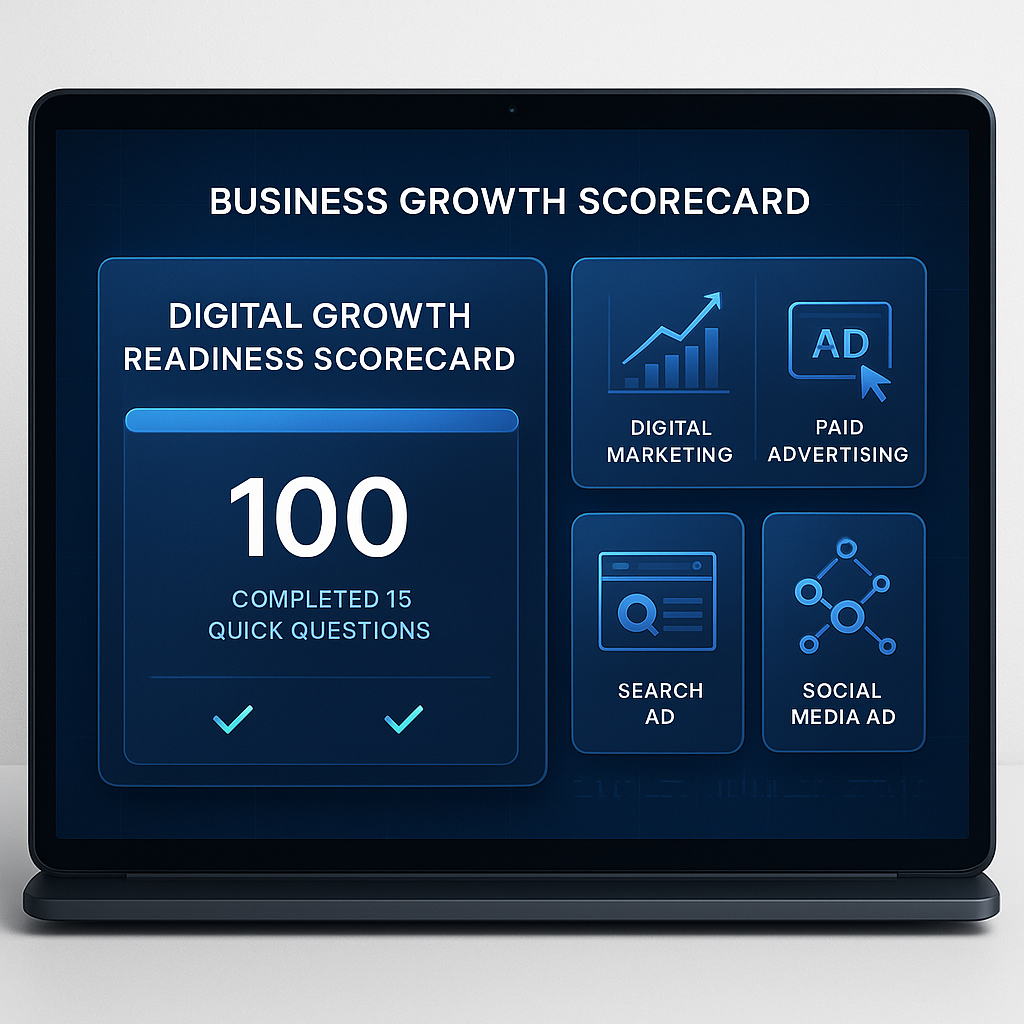
Table of Contents
The Growth Problem Most Businesses Misdiagnose
Why “More Effort” Doesn’t Fix Growth Plateaus
Growth Is a Systems Problem, Not a Tactics Problem
The Real Reason Scaling Feels Risky
Why Smart Leaders Diagnose Before They Decide
What “Growth Readiness” Actually Means
The Cost of Scaling Without Readiness
How to Identify Your Growth Constraints (Without Guessing)
Introducing The Digital Growth Readiness Scorecard
Understanding what limits growth requires more than intuition or surface-level metrics. The Digital Growth Readiness Scorecard is a short, structured assessment designed to help you identify the real constraints shaping your ability to scale—across strategy, execution, operations, and decision-making.
In just a few minutes, the scorecard evaluates how aligned your business systems are to support growth and highlights where misalignment may be quietly limiting progress. You’ll receive a personalized breakdown of your growth readiness, along with clear insights into what to address first—so future growth decisions are based on clarity, not guesswork.

What the Scorecard Evaluates
What Happens After You Get Your Results
How This Fits Into a Smarter Growth Path
Get Clarity Before You Scale
Scaling without understanding your constraints introduces unnecessary risk. The Digital Growth Readiness Scorecard helps you identify what’s truly shaping your growth potential today—so your next move is deliberate, informed, and aligned with your business reality.
Long Term Success isn't an Accident
When I designed the Digital Growth Readiness Scorecard, I wanted to provide a tool that business owners could use to quickly and easily diagnose where they stood. I also wanted the tool to make use of my personal experience helping hundreds of businesses, from global fortune 100 enterprises to small, one-man startups.
Some 'Universal' Observations
Regardless of business size, or target market, I've been able to observe and develop growth strategies that work. With a deep background in digital marketing, backed up by decades of experience with SAP ERP (which, among many capabilities, provides good, out-of-the-box process models), I've been able to formulate and apply highly effective digital marketing and sales strategies that help my customers achieve incredible business growth.
Expand Your Customer Base
Adding new items to your product line can be an effective way to expand your customer base and help it grow. Your scorecard may reveal that you have areas you need to improve before launching a new product. Or it may tell you that you're leaving money on the table because you're not spending enough on marketing efforts or sales. Or perhaps you need to spend more time on market research and further identifying your Ideal Customer Profile.
Multiple Income Streams
One of the key ways we've seen companies boost revenue is to have multiple streams of income. One particularly interesting example of was health & fitness business that initially sold just a book, then expanded into supplements, then meals in a box and finally, added in a subscription model. This absolutely exploded their revenue and most importantly, profits.
How to Measure Success
While Top Line Revenue and Profit Growth are key financial metrics, one particularly powerful indicator of future success is your new customer acquisition rate. While it depends very much on your offer, marketing automation is one of the keys to being able to measure it and improve it. Marketing automation is also essential to measuring customer acquisition cost (CAC). It's also a key piece of the predictable recurring revenue puzzle.
Schedule a Consult
In order to see if we are the right fit for your business, schedule a call with one of our strategists.
What Our Customers Say About Us

Elizabeth Sanjenis, Sr. IT Global Sales and Marketing Business Analyst, Johnson Controls
Working with Lonnie was a wonderful surprise in my career. Not only is he a passionate Marketing professional, but a great team member and employee with more than a "can-do" attitude, but rather a "we will" conviction. With his help and strategic expertise in SEO and Inbound Marketing, we were able to improve our website's lifetime visits count from 2.37 million in two years, to 1 million visitors per month. He also helped boost our shopping cart conversion rate from 7 to 13 percent, and implemented YouTube best practices that helped raise our subscriber count from about 1k to 21k, among other multiple contributions, which helped our company reach unprecedented increases in revenue. He is a very powerful addition to any strategic digital marketing team and I sincerely look forward to the opportunity of working with him in the future again.

Soren Detering, Detering Consulting
Working with Lonnie Ayers of SAP BW Consulting, Inc. has helped me grow my SAP practice to multi 8 figure SAP consulting engagements. I've also become an official SAP Partner and refined and perfected my Sales approach.

General Manager WW Strategic Sales Dynamics365 at MicrosoftRome Area, Italy
Working with Lonnie represented for me an extraordinary chance to increase my knowledge into the Airline MRO Operation. Lonnie is great to understand industry trends and issue issues and match those with customer request and advising the customer on who SAP solution provide support. Lonnie is a very proactive professional with an entrepreneur mindset.
Featured in











FAQs
OUR FREQUENTLY ASKED QUESTIONS
This scorecard is designed for business owners, executives, and marketing leaders who are experiencing stalled, inconsistent, or uncertain growth. It’s especially useful for organizations considering increased investment or scaling efforts and want clarity before committing resources.
After completing the scorecard, you receive a personalized summary of your growth readiness and the key factors influencing it. The results highlight where constraints exist today and where focused improvements can expand future growth options.